Autonomous Networks 2030
Xyna Bulletin #34
Dear friends, partners, and customers of Xyna,
London and Delhi. Two cities some 6,700 kilometers apart, with seemingly little in common. Apart from plenty of traffic, an international crowd, and the fact that we have visited both over the past few weeks. 🇬🇧 🇮🇳
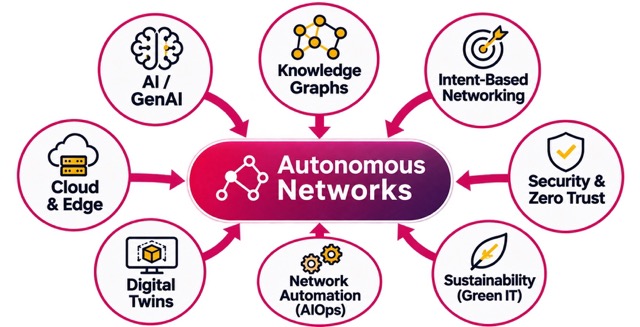
From a technology perspective, however, there was one striking common denominator: Autonomous Networks. The telco industry has set itself an ambitious target: Autonomous Networks Level 4 by 2030. And naturally, that makes it highly relevant to us and our customers as well. After all, autonomous networks require more than intelligent network elements. They need a powerful IT landscape capable of orchestrating that intelligence across systems and network domains.
In London, we joined the TM Forum to discuss how this vision can become a scalable reality. In India, we visited Deutsche Telekom Digital Labs (DTDL) and presented Xyna as a platform for sophisticated network automation.
And of course, we are working on the technology to make it happen: with intent-based orchestration, the visualization of execution graphs, and new AI capabilities such as the native MCP interface in Xyna 11.
Three topics, one common destination. Enjoy the read!
Best regards from Mainz,
Alexander & Philipp
::
TM Forum Autonomous Networks Workshop – London 2026
In late October, Alexander and Philipp attended the TM Forum workshop "Building the Autonomous Networks Playbook – From Strategy to Implementation at Scale" in London, hosted at Google.
The title pretty much sums it up: the industry now has a reasonably clear understanding of what Autonomous Networks should achieve. The real challenge is how to turn these capabilities into reality across large, heterogeneous network and IT landscapes that have evolved over decades.
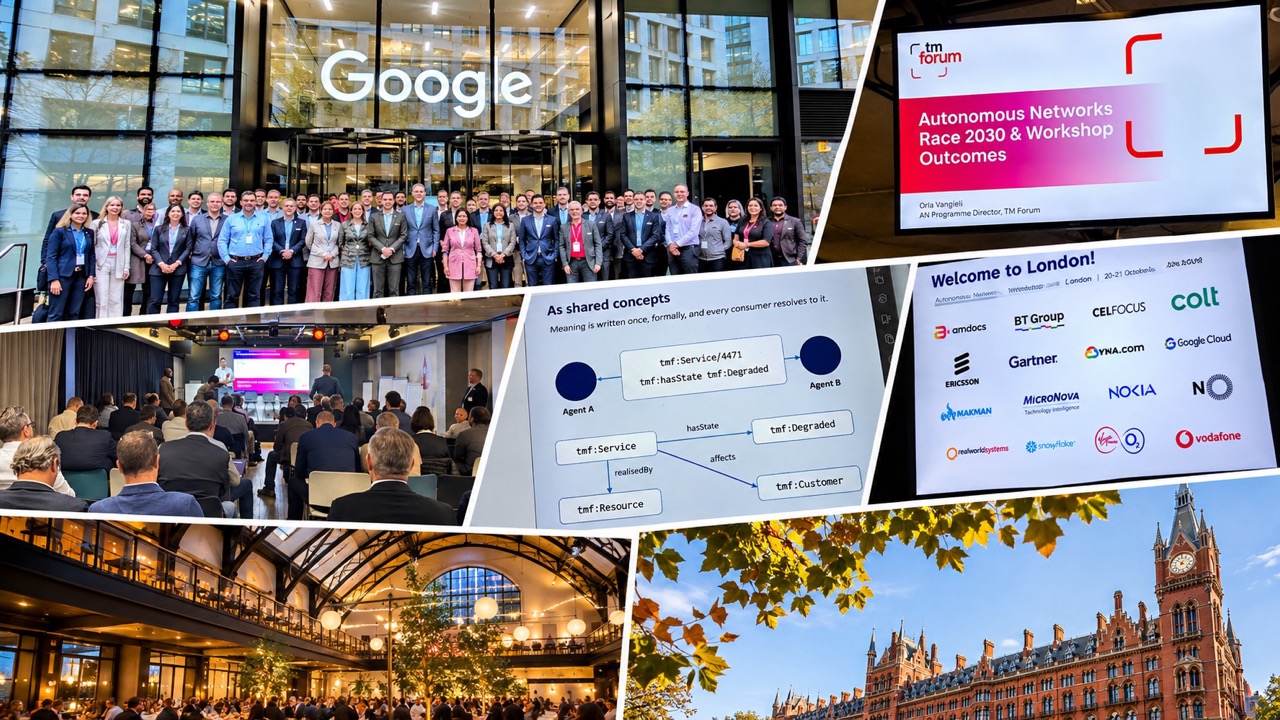
The discussions focused on frameworks, standards, ontologies, and practical approaches to implementing autonomous networks. We found the work on the Federated TM Forum Ontology (FTO, TR328) particularly interesting. This goes beyond establishing common terminology and data models. It is about formally describing relationships, dependencies, and the underlying semantics of network services and resources.
Why does this matter? Because autonomous systems, and AI agents in particular, need a machine-readable understanding of their environment. An LLM alone does not know which services depend on which resources, which configuration changes are permitted, or how a decision might affect other parts of the network.
This is precisely where the TM Forum's work intersects with our own developments around intent-based orchestration, execution graphs, and knowledge graphs.
Our takeaway from London: Reaching Autonomous Level 4 by 2030 is an ambitious target. But the standards and architectural concepts needed to get there are becoming increasingly tangible. The next challenge is turning these concepts into production-ready systems.
And naturally, there was time for networking, too. Following the first workshop day, Huawei hosted a reception at the German Gymnasium. Very British, rather German, and a great opportunity to continue the discussions beneath a spectacular roof structure.
::
Xyna Goes India
From London, our journey continued – at least thematically – to India. In late October, Xyna visited Deutsche Telekom Digital Labs (DTDL) in Delhi.
With more than 1,400 highly skilled developers and consultants on site, DTDL is an important part of Deutsche Telekom's international technology and engineering ecosystem.
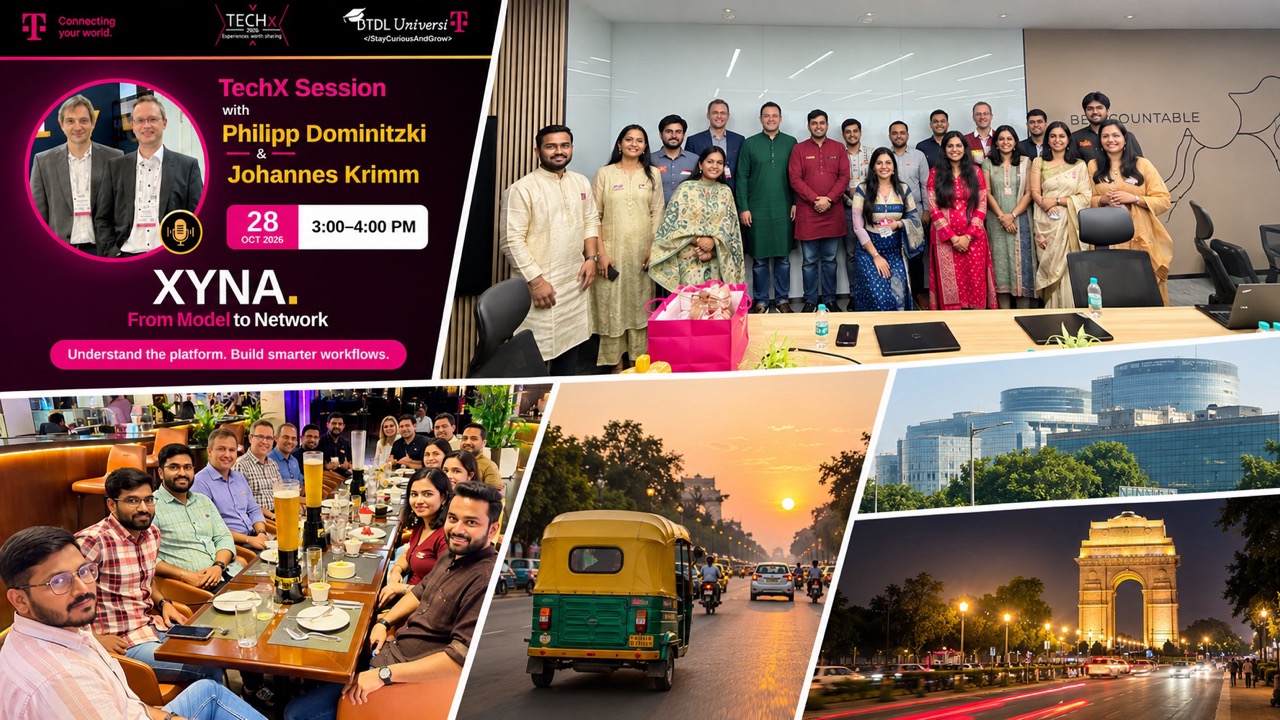
During a TechX session, we had the opportunity to present Xyna Factory live as an open source, model-driven platform for complex automation and orchestration tasks in telecommunications networks.
But this was about more than introducing another software product. The requirements for OSS platforms are fundamentally changing. While today's automation often focuses on individual processes, orders, and resources, tomorrow's systems will need to autonomously manage entire service lifecycles across multiple network domains.
For Deutsche Telekom and other major service providers, the ambition to reach Autonomous Level 4 by 2030 is therefore much more than a topic for strategic roadmaps. It directly affects the evolution of existing IT systems, interfaces, data models, and automation processes.
This is exactly where we see Xyna making a difference: integrating existing system landscapes, modeling complex workflows, and gradually introducing new capabilities for intent-based automation and AI-driven operations.
Our takeaway from India: The transformation toward Autonomous Networks is not just about new technologies. It also requires people, engineering expertise, and international collaboration to turn architectural concepts into real-world production solutions.
::
Xyna Factory – Building Blocks for Autonomous Level 4
So, what do these developments around Autonomous Networks actually mean for Xyna?
First of all, we do not need to reinvent our platform. Many of the fundamental capabilities required by autonomous networks have been part of Xyna's DNA for years: model-driven processes, service-oriented orchestration, integration of heterogeneous systems, and transparent, traceable execution.
Our latest developments add several important building blocks.
Intent-Based Orchestration & Execution Graphs
Rather than explicitly defining every individual technical step, an intent describes the desired target state. The orchestration system derives the necessary state transitions, dependencies, and execution steps.
With the visualization of execution graphs, these relationships become visible and easier to understand. Which services are affected? What dependencies exist? Which operations can run in parallel? This creates transparency and provides an important foundation for the evolution toward autonomous, state-driven orchestration.
MCP – Xyna Becomes AI-Ready
With Xyna 11, the platform introduces native support for the Model Context Protocol (MCP). This allows AI agents to access data and business functions of Xyna-based applications in a controlled manner. Existing processes and technical capabilities can thus become accessible to AI-driven use cases without having to develop a proprietary integration layer for every individual application.
Combined with the new AI backend, which also supports self-hosted language models within the customer's infrastructure, this opens up new possibilities for AI-assisted operations and agentic automation.
Knowledge Graphs – Understanding the Network
Another important development direction is the integration of orchestration information, service and resource inventories, and semantic data models.
Execution graphs and the state transitions performed during orchestration can provide the foundation for a continuously updated knowledge base describing the relationships between network services and resources.
Such knowledge graphs, in turn, can serve as a foundation for AI agents that do more than retrieve data: agents that understand relationships, assess potential impacts, and support informed decisions.
This is not an autonomous network at the push of a button. But these are important building blocks on the road toward one.
Road to 2030 – The Clock Is Ticking
Four years until 2030. That may sound like plenty of time. But anyone who has ever been involved in a major OSS transformation knows just how quickly four years can disappear.
Autonomous Level 4 is not simply about automating a few more processes or connecting an AI agent to an existing system. It represents a fundamental shift: away from isolated, predominantly reactive automation and toward largely autonomous, intent-driven, closed-loop management of complex networks.
There will not be one single platform capable of handling every aspect of this transformation. What matters is the interplay of open standards, consistent data models, reliable orchestration, intelligent decision support, and controlled execution.
Our ambition is for Xyna Factory to play a central role in this evolving architecture. Open, integration-friendly, model-driven, and increasingly AI-ready