Extended Collaboration with TU Darmstadt
continuing our partnership with Harald Kolmar's research group!
We are excited to share that we extended our collaboration around VHH developability & research with Harald Kolmar's research group at Technische Universität Darmstadt through the end of 2027!
This continuation reflects the strong collaboration and mutual values we have built together and we are proud to keep advancing our shared goals 🔬
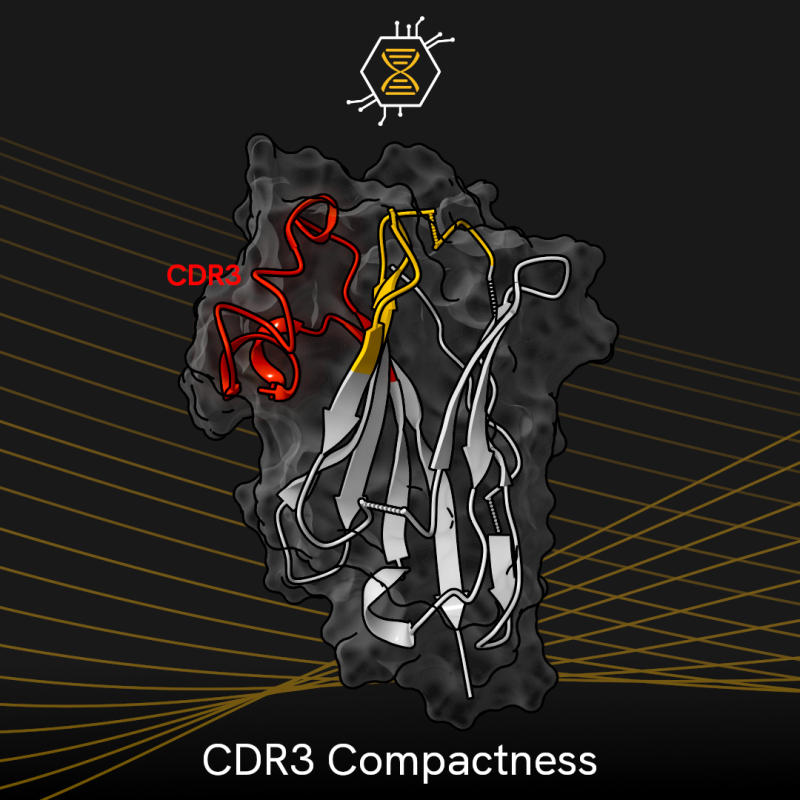
In a recent discussion with Felix Geyer, we talked about VHH CDR3 flexibility and the role of disulfide bonds.
About 10-30% of VHHs contain disulfide bonds in their CDR3 loops, which can shape loop flexibility and potentially influence binding kinetics:
CDR3 flexibility could affect both how quickly VHHs are able to engage epitopes and how stable those interactions remain.
For nanobody discovery, this raises compelling engineering questions. Can we use the targeted introduction/removal of disulfide bonds or other substitutions that influence flexibility to control loop dynamics in predictable ways?
At xyna.bio we think this is exactly where hybrid approaches become powerful. Combining AI driven structure and affinity prediction with physics-based simulations allows us to explore these hypotheses systematically.