Rückblick ORM + Release Xyna 10.7
Xyna Bulletin #29
Dear friends, partners, and customers of Xyna,
…the year is flying by and we're approaching the first quarterly hurdle! 🐰
Last week, we were at OpenRheinMain in Darmstadt. And we've brought you some impressions and results in this newsletter. First and foremost, and this is perfectly clear: there's no getting around Agentic AI from now on. But despite all the enthusiasm – when you unleash lobsters on networks, you should have given some thought to responsibility and trust beforehand. Nobody wants to be sitting in tears in front of a perfectly automatically configured and broken network…
In the second part below, you can also browse some highlights of the current Xyna Release 10.7. It's sure to get you in the Easter spirit… 🐣
Happy reading!
Best regards from Mainz,
Philipp
GIP Exyr GmbH | Xyna GmbH
Dr. Alexander Ebbes & Philipp Dominitzki
::
Review: OpenRheinMain 2026
Since 2019, the OpenRheinMain (ORM) conference has stood for innovation based on open solutions in the fields of networks, data analysis, AI, and cybersecurity. And this year, many well-known companies and smaller startups answered Prof. Dr. Michael von Rüden's call and contributed to a diverse and impressive agenda.

As a premium sponsor, we were honored to deliver the keynote address. For this, Alexander enlisted a colleague from the Jülich Research Centre: Dr. Kirstin Weber has the privilege of working on the JUPITER supercomputer as part of her role as project coordinator for the European Meteorological Programme. JUPITER is the most powerful computer in Europe and the first exascale computer on the continent. It performs over one trillion calculations per second, is the fourth fastest in the world, and primarily serves AI research and simulation.
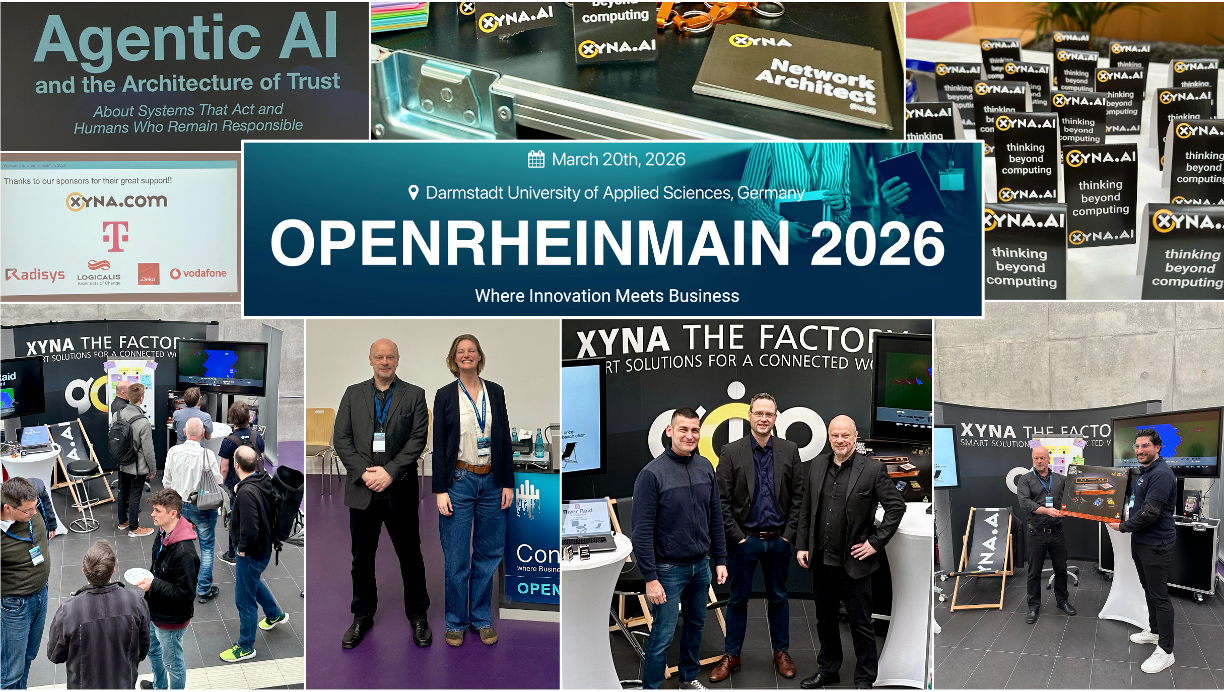
Together, in their presentation "Agentic AI and the Architecture of Trust / About Systems That Act — and Humans Who Remain Responsible", they examined the current wave of agentic AI systems and explored how the use of such systems, particularly in the context of critical infrastructures, can be designed to ensure that trust is maintained.
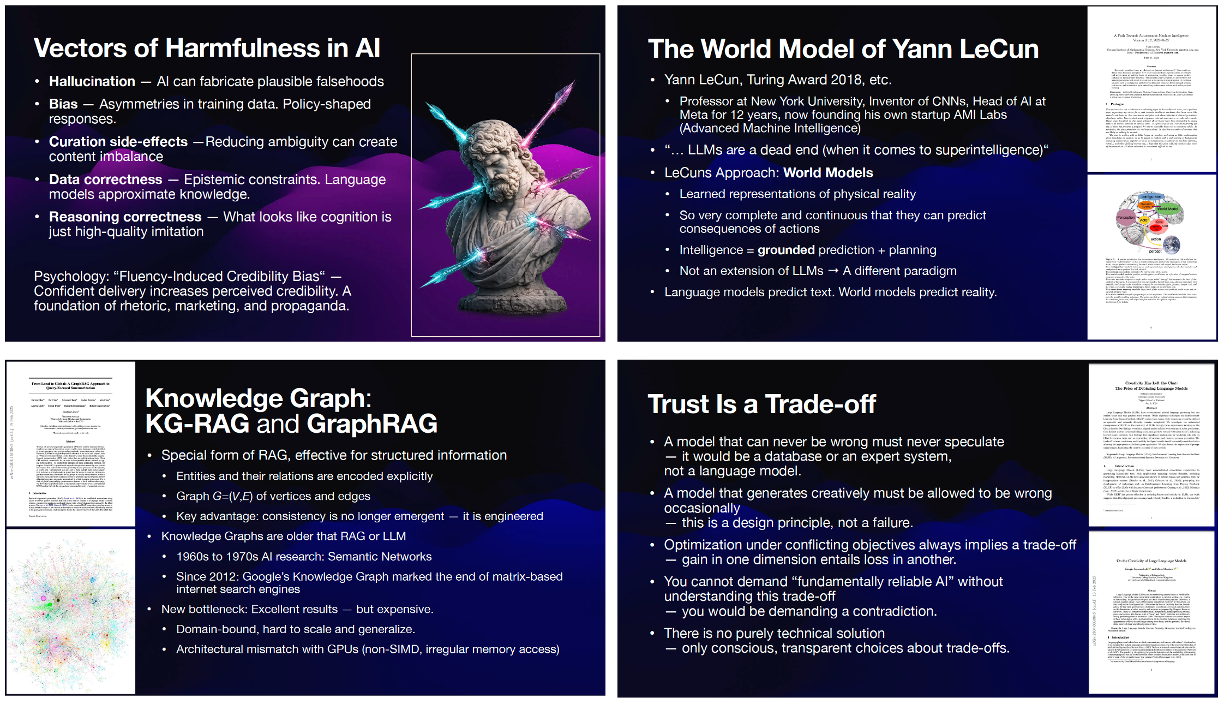
Because at the end of every chain, people remain responsible. This is especially true the more sensitive and potentially dangerous the effects and reach of these systems are. The presentation was very well received – and if this topic resonates with you and you'd like to learn more, just get in touch. We look forward to discussing it further!
While serious topics were being addressed in the lecture hall, things were even more intense at our booth: the 2026 edition of the popular Xyna River Raid Tournament demanded the utmost concentration and perseverance to navigate the bay on an original 80s Atari, completely without AI or autonomy.
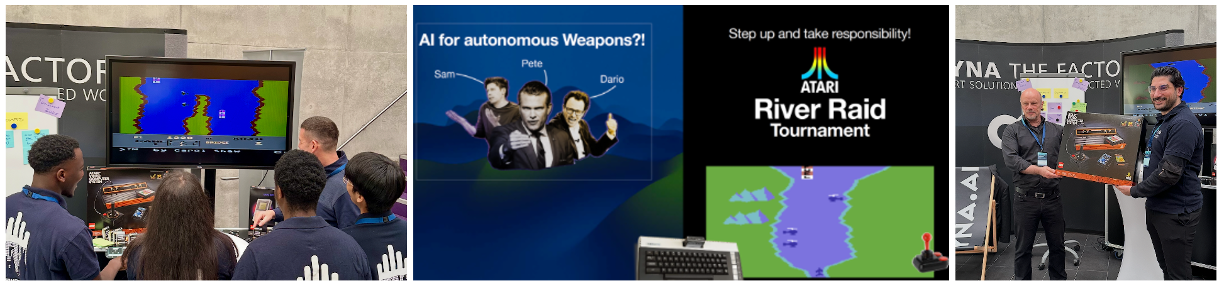
In the end, there was a clear winner and new contacts for our HR development programs. As the discerning reader will see: if ORM 2027 is held again – it will be worth being there!
::
Xyna 10.7 - Highlights
Just in time for Easter, Xyna 10.7 will be released in the coming days. A splendid release with many small and some particularly noteworthy highlights:
- Xyna Shared Resource Management (SRM): Operation of Xyna-based applications in multiple, cooperating containers through synchronization of capacities, vetoes, and generated IDs via parallel worker nodes. A more detailed review will be provided in an upcoming bulletin.
- Operations - Import and Export of Xyna Properties: For automated build and deployment pipelines, it is crucial that environment variables and other settings can be queried and set externally. Previously, this was only partially possible, with much of it done through the graphical interfaces. Now, all variables can also be processed via CSV or YAML.
- Xyna Zeta - Support for Angular 21: Google employs a rather dynamic release strategy for the popular framework (weekly patch releases, minor releases every 1-3 months, major releases every 6 months). Version 21, released at the end of last year, includes some exciting features such as MCP support for AI assistants and Aria, a new library for accessible "headless" (style-free) UI components.
- Xyna Zeta - Multi-select dropdowns: A new feature is available for more sophisticated multi-selection functionality in Zeta frontends. This is interesting in terms of content, but especially noteworthy because it's an external contribution from our partner DTDL. Many sites benefit from the open-source model in this instance. Thank you!
All other features, enhancements, and fixes included in this release can be found in the release notes on GitHub, as usual. And, also as usual, ready-to-run images are available on Docker Hub. Enjoy!